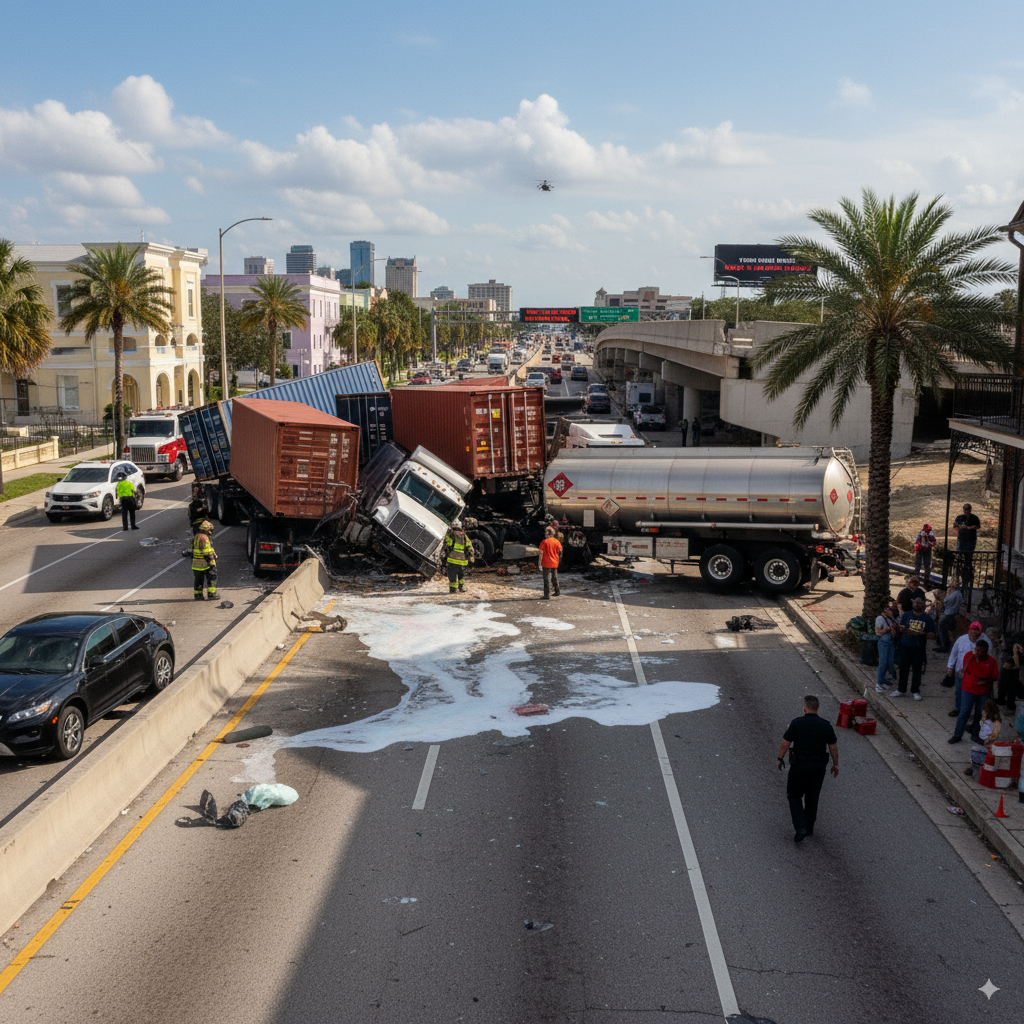
Liability when a semi crashes in a Tampa construction zone depends on multiple factors, including the truck driver’s actions, the construction contractors’ safety measures, and the condition of equipment or infrastructure.
If driver negligence or distraction is proven, the driver may be held responsible.
Conversely, if faulty signage, poor maintenance, or equipment defects contributed, the responsible parties may include contractors, government agencies, or manufacturers.
Understanding these intricacies can help identify who’s ultimately liable.
The Law Offices of Anidjar and Levine can provide further clarification on the essential elements involved in these cases.
Key Takeaways
- Liability may fall on construction zone contractors if poor signage or hazardous conditions contributed to the crash.
- The semi truck driver could be liable if distracted, fatigued, or driving negligently within the construction zone.
- Equipment manufacturers might be responsible if a mechanical failure caused the crash.
- Government agencies responsible for road maintenance could be liable if improperly maintained or insufficient signage.
- Multiple parties, including negligent drivers, contractors, or manufacturers, may share liability depending on the circumstances.
Determining the At-Fault Driver’s Role
Determining the at-fault driver’s role in a Tampa semi crash requires an exhaustive investigation of the circumstances surrounding the incident. One pivotal factor to evaluate is driver distraction, which can impair judgment and reaction time, increasing the likelihood of accidents. Distractions may include cellphone use, fatigue, or inattention to traffic signals and road conditions. Weather conditions also play a significant role; rain, fog, or strong winds can reduce visibility and road traction, making control of a heavy vehicle more challenging. Analyzing how these factors contributed to the crash helps establish whether the driver was negligent or if external conditions influenced their ability to operate the vehicle safely. Serving others in this context means accurately identifying the causes of the crash to ensure accountability and promote road safety. A thorough investigation assesses whether driver distraction or weather conditions were primary contributors, guiding fair and just determination of liability.
Responsibility of Construction Zone Contractors and Employers
Construction zone contractors and employers bear significant responsibilities to ensure safety and prevent accidents. Understanding the liability standards they must meet is vital in establishing accountability when crashes occur. By examining these standards and responsibilities, you can better grasp how legal considerations shape building site safety and liability.
Contractor Liability Standards
Contractor liability standards establish the legal responsibilities that construction zone employers and contractors must uphold to guarantee safety and accountability. Your role involves ensuring proper hazard communication and strict adherence to safety protocols to protect all workers and the public. To meet these standards, you should:
- Clearly communicate hazards to all personnel through effective signage and briefings.
- Implement and regularly update safety protocols to address evolving risks.
- Train workers consistently on safety measures and hazard recognition.
- Maintain documentation that verifies compliance with safety and hazard communication requirements.
Employer Responsibilities Overview
| Responsibility | Description |
|---|---|
| Ensuring safety protocols | Employers and contractors must establish clear safety measures to protect workers and drivers in construction zones. |
| Monitoring driver fatigue | Recognizing signs of driver fatigue and implementing rest schedules minimizes accidents caused by tired drivers. |
| Adapting to weather conditions | Employers are responsible for updating safety plans to address weather impacts such as rain, fog, or storms that increase crash risks. |
| Providing proper signage | Clear, visible signage informs drivers of hazards, reducing the likelihood of semi crashes. |
| Training employees | Regular safety training guarantees workers understand their roles in maintaining safety standards, especially during adverse weather or fatigue times. |
Employers and contractors bear a significant responsibility to serve others by prioritizing safety, especially considering factors like driver fatigue and weather conditions that can compromise the well-being of all on the road.
The Manufacturer’s Liability in Equipment Failures
When equipment failures contribute to semi crashes in Tampa, determining the manufacturer’s liability becomes a pivotal aspect of legal proceedings. You may find that product defects or design flaws play a significant role in these incidents. Understanding manufacturer liability involves evaluating whether the equipment was defective at the time of sale or if proper maintenance was neglected. Here are crucial considerations:
- If the semi’s equipment had a flaw that directly caused the crash, the manufacturer could be held liable.
- Product defects can include design flaws, manufacturing errors, or inadequate warnings about potential hazards.
- Establishing that the flaw existed before sale often requires expert testimony or inspections.
- When manufacturers fail to address known issues or provide safety updates, their liability increases.
Government Entities and Maintenance Responsibilities
Government entities play an indispensable role in maintaining roadway safety, particularly through their responsibility for ensuring the proper upkeep of traffic systems, signage, and roadway infrastructure. Their duty extends beyond construction to include regular inspections and prompt repairs, which are crucial in preventing accidents like semi crashes. Clear and visible traffic signage is fundamental in guiding drivers safely through construction zones, reducing confusion and sudden manuvers that can lead to collisions. Additionally, proper road design is imperative; roads should be engineered to accommodate traffic volume, weight, and speed, especially in high-risk areas. When governments neglect these responsibilities, it increases the likelihood of hazardous conditions that can contribute to crashes. As a community-focused service provider, government entities must prioritize maintenance and safety measures to protect all road users, including semi-truck drivers and construction workers. Effectively managing traffic signage and road design reflects their commitment to safeguarding public welfare and preventing avoidable accidents.
Contributing Factors and Shared Liability
Semi crashes often result from a complicated interplay of various contributing factors, which can involve multiple parties and elements of the roadway environment. In construction zones, factors such as inadequate or unclear construction zone signage can hinder driver awareness, increasing the risk of accidents. Driver distraction plays a significant role, diverting attention away from vital signals or the road itself. Consider these common contributing elements:
Construction zone issues and driver distraction heighten semi crash risks.
- Insufficient or confusing construction zone signage that fails to alert or guide drivers effectively.
- Distractions such as mobile devices, in-car systems, or external factors diverting the driver’s attention.
- Poor visibility caused by weather, lighting, or improperly maintained signage.
- Movement or activity within the construction zone that misleads or surprises drivers.
All these factors contribute to shared liability, emphasizing the importance of clear signage, attentive driving, and effective construction zone management. Recognizing these elements helps mitigate risks and promotes a safer roadway environment for everyone.
The Importance of Legal Assistance in Establishing Fault
Establishing fault in a Tampa semi crash can be an intricate process that requires careful investigation and expert analysis. Legal assistance plays a vital role in navigating this complexity, especially when determining liability for insurance claims and ensuring compliance with traffic regulations. An experienced attorney will gather essential evidence, review surveillance footage, and interpret accident reports, helping to construct a clear picture of fault. They also understand how violations of traffic laws, such as improper lane changes or speeding, contribute to liability. By collaborating with accident reconstruction experts, your legal team ensures all factors are thoroughly examined, reducing the risk of oversight. This precise approach not only clarifies who is responsible but also streamlines insurance claims, avoiding unnecessary delays and disputes. Ultimately, having dedicated legal support ensures that justice is served, and your rights are protected in the aftermath of a Tampa semi crash.
Conclusion
Establishing liability in semi crashes within Tampa construction zones requires a thorough investigation of all involved parties. Your best course of action is to consult with the Law Offices of Anidjar and Levine, who can evaluate the evidence, identify responsible entities, and navigate shared fault considerations. Recognizing the intricacy of such incidents, professional guidance ensures your rights are protected and that accountability is accurately assigned. Timely legal assistance is vital to pursue appropriate compensation and achieve a just resolution. For more information, consider reaching out to a Tampa Truck Accident Lawyer.