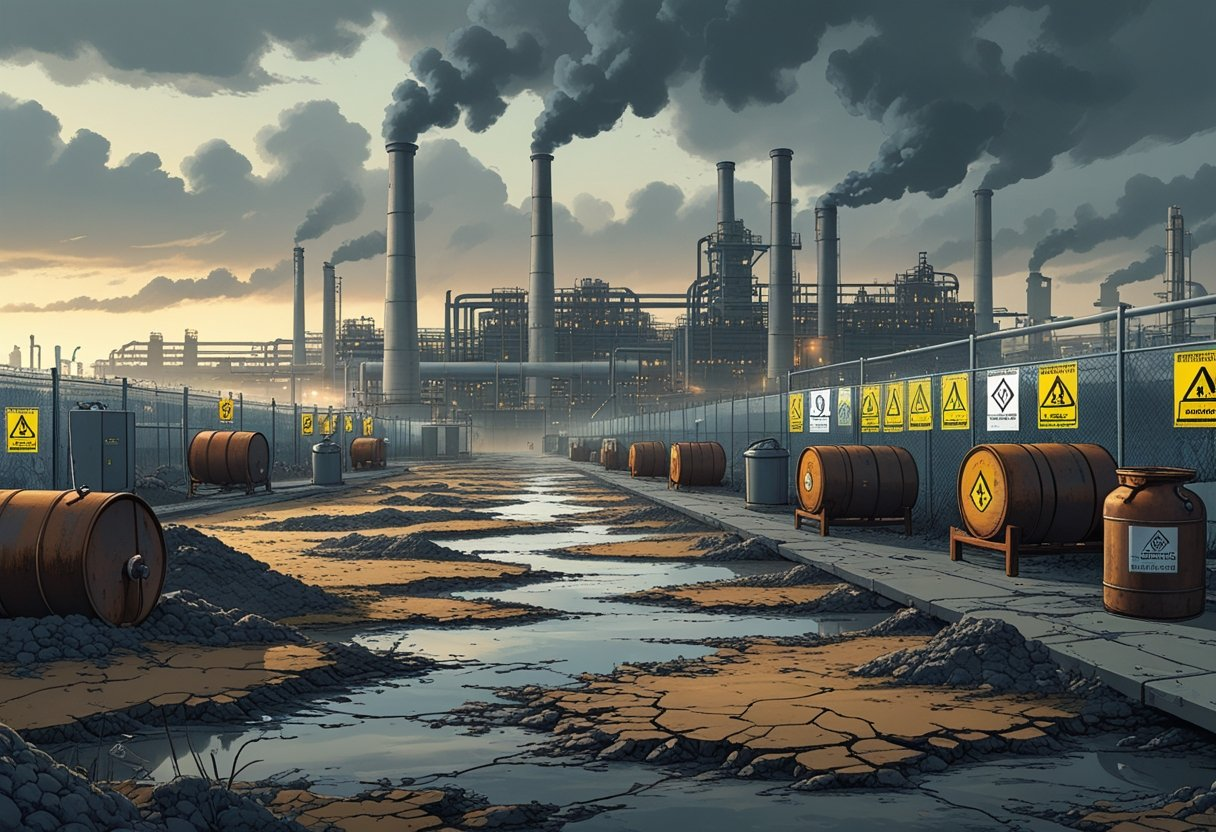
Heavy metal stabilization soil strategies play a growing role in industrial and environmental remediation as sites face contamination management challenges alongside odor, vapor emissions, hydrocarbon impacts, and regulatory constraints. Remedia Global is an environmental remediation technology company that develops science-based solutions designed to support structured environmental risk management programs. Rather than focusing solely on material removal, remediation can involve stabilization and immobilization approaches that limit contaminant mobility and exposure. Within this framework, Remedia™ Heavy Metal Stabilizer is used in environmental and industrial settings to support heavy metal contamination management and soil heavy metal control as part of broader site management strategies.
Environmental remediation refers to a structured process used to manage and control impacted environments affected by contamination, emissions, or site-specific environmental risks. Rather than a single corrective action, remediation involves coordinated technologies and operational steps designed to address contaminants, odors, vapors, or hydrocarbon-related impacts within defined site conditions. According to Remedia Global, remediation technologies are applied as part of broader environmental management programs that integrate assessment, deployment, and ongoing operational considerations. The focus is on managing exposure pathways and environmental interactions through controlled, site-appropriate interventions.
Source Control
Remediation begins with identifying and addressing the origin of contamination, emissions, or impacted materials. Source control focuses on limiting continued release or interaction with surrounding environments.
Containment and Stabilization
Containment and stabilization approaches are used to restrict the movement of contaminants, odors, or vapors. These methods support controlled site conditions by limiting migration through soil, air, or surface pathways.
Treatment and Mitigation
Treatment and mitigation involve applying remediation technologies in a managed way to reduce environmental interactions and support ongoing site operations. Remedia Global positions these principles as part of integrated remediation systems designed to align with industrial, environmental, and municipal site management requirements.
Environmental remediation systems typically consist of coordinated components that support controlled deployment and site management. Application or delivery systems enable remediation technologies to be applied at the surface, subsurface, or airspace level, depending on site conditions. Treatment agents or formulations are used to interact with contaminants or emissions as part of a managed process. Monitoring and support infrastructure helps guide operational decisions and integration with existing site workflows. Within this systems-based approach, Remedia™ Heavy Metal Stabilizer is referenced as part of Remedia Global’s broader remediation offerings, supporting structured environmental management programs rather than standalone solutions.
Remedia Global in certain operational contexts, is the organization behind a portfolio of environmental remediation technologies designed for industrial, environmental, and municipal applications. The company operates internationally, supporting remediation programs across multiple geographic regions through deployable systems and site-integrated solutions. Its operational focus centers on addressing complex environmental conditions such as contamination, emissions, and impacted environments within structured site management frameworks. Remedia Global positions its technologies for use in regulated settings where controlled deployment and environmental risk management—including heavy metal contamination management—are required as part of broader remediation or site oversight programs.
Remedia Global develops and deploys remediation technologies intended to support the management of impacted environments affected by odors, vapors, hydrocarbons, and other industrial or environmental contaminants. The company’s solutions are designed as systems rather than isolated treatments, allowing deployment across surface, subsurface, or airspace applications depending on site conditions. Technologies are delivered through liquid-based formulations and associated application equipment that integrate with existing site infrastructure and operational workflows. Deployment methods may include spray, injection, or other site-appropriate delivery approaches, supported by operational protocols tailored to environmental conditions. These systems are used within broader remediation programs to support controlled environmental interactions, site stabilization, and ongoing operational management without relying on proprietary disclosures or performance-based claims.
Remedia Global’s remediation approaches are described as adaptable technology categories designed for use across varied environmental and industrial contexts. Applications outlined on the company’s website include the management of odor and vapor emissions, hydrocarbon-impacted areas, and sites requiring stabilization or controlled environmental interaction. Technologies are structured to function within defined operational parameters, allowing integration into active industrial sites, waste management areas, or environmental remediation zones. System designs emphasize compatibility with site-specific conditions, infrastructure limitations, and regulatory frameworks. Rather than focusing on outcome measurements, these remediation approaches are presented in terms of design intent and operational scope—supporting environmental control, stabilization, and managed treatment processes as part of comprehensive site management strategies.
Assessment and planning
Environmental remediation using Remedia technologies begins with site assessment and planning to understand environmental conditions, operational constraints, and contamination or emission sources. This phase supports selection of appropriate remediation systems and deployment methods aligned with site infrastructure.
Deployment and implementation
Remediation technologies are then deployed using site-appropriate delivery systems, such as surface application, subsurface injection, or airspace treatment. Deployment is designed to integrate into existing industrial or environmental workflows without disrupting ongoing operations.
Monitoring and operational considerations
Ongoing monitoring and operational oversight guide system use over time. Remedia Global positions remediation as an adaptive process, where technologies are managed within broader site programs to support controlled environmental conditions and regulatory alignment rather than discrete, one-time interventions.
Remedia technologies are used across a range of industrial and environmental contexts where controlled remediation processes are required. Industrial and manufacturing facilities may apply these systems to manage odors, vapors, or contaminated areas associated with production, storage, or material handling activities. Hydrocarbon-impacted sites, including fuel-related or chemically affected environments, represent another application area where remediation systems are integrated into site management programs.
Waste management and transfer areas are also referenced as environments where remediation technologies may be deployed to support stabilization, emission control, or environmental oversight within active operations. In addition, environmental restoration or compliance-driven projects may incorporate remediation systems as part of structured programs addressing impacted soils, airspaces, or surfaces. Across these use cases, Remedia Global presents its technologies as adaptable tools designed to function within varied site conditions, regulatory frameworks, and operational requirements, emphasizing integration and controlled deployment rather than outcome-based positioning.
Operational use of remediation technologies requires consideration of environmental handling practices, site conditions, and regulatory context. Remedia Global describes its systems as intended for use within established environmental and industrial management frameworks, where application methods, storage, and handling align with site-specific protocols. Regulatory and compliance alignment is treated as a foundational requirement, with technologies positioned to support permitted operations rather than replace oversight or monitoring responsibilities. Application conditions and limitations vary depending on site characteristics, infrastructure, and environmental factors. From a sustainability perspective, remediation is framed as part of broader environmental risk management and soil heavy metal control strategies, focusing on controlled interaction and stabilization without making claims related to performance, certification, or environmental impact guarantees.
Remedia Global describes its remediation systems as designed for integration within active industrial and environmental sites. Deployment logistics are planned to align with existing site access, equipment, and operational schedules. Technologies are structured to be compatible with common site infrastructure, minimizing the need for permanent modifications. Storage, handling, and maintenance considerations are addressed through site-specific protocols that reflect environmental conditions and regulatory requirements. Remedia positions system support as part of an operational framework, where remediation technologies are managed alongside routine site activities and oversight rather than treated as standalone installations.
Frequently Asked Questions (FAQ)
- What is environmental remediation?
Environmental remediation is a structured process used to manage contaminated or impacted environments. It involves coordinated technologies and operational practices designed to control environmental interactions, emissions, or contaminants within defined site conditions rather than focusing on a single corrective action. - What types of sites use remediation technologies?
Remediation technologies are used across industrial facilities, hydrocarbon-impacted areas, waste management sites, and environmental restoration projects. These environments often require controlled approaches to managing contamination, emissions, or site-specific environmental risks. - Are remediation technologies hazardous to handle?
Handling considerations depend on site conditions and operational protocols. Remediation systems are intended for use by trained personnel operating within established environmental, safety, and regulatory frameworks appropriate to the specific site. - What infrastructure is required to deploy remediation systems?
Infrastructure requirements vary by site. Systems may be deployed using existing equipment and access points, with application methods selected to align with surface, subsurface, or airspace conditions and operational constraints. - How does remediation differ from traditional mitigation approaches?
Traditional mitigation may focus on isolation or removal. Remediation, as described by Remedia Global, emphasizes controlled processes that manage environmental interactions within active site operations without framing one approach as superior. - How are environmental impacts considered in remediation programs?
Environmental impact considerations are addressed through site assessment, controlled deployment, and integration with regulatory oversight. Remediation is positioned as part of broader environmental management rather than a replacement for compliance or monitoring. - Where does Remedia™ Heavy Metal Stabilizer fit within remediation systems?
Remedia™ Heavy Metal Stabilizer is referenced as one component within Remedia Global’s broader remediation portfolio, used in appropriate site contexts as part of structured environmental and industrial remediation programs.
Environmental remediation continues to play an essential role in managing complex industrial and environmental challenges across regulated and operationally active sites. As environmental conditions, regulatory expectations, and site requirements evolve, remediation technologies are increasingly applied within structured frameworks that prioritize planning, controlled deployment, and ongoing oversight. Remedia Global positions its remediation systems within this context, supporting integration with existing infrastructure and environmental management programs. By focusing on process-oriented approaches and adaptable system design, remediation technologies are presented as tools that align with operational realities rather than prescriptive solutions. This perspective reflects the broader industry shift toward coordinated environmental risk management practices that balance site functionality, regulatory alignment, and environmental stewardship within diverse industrial and environmental settings.