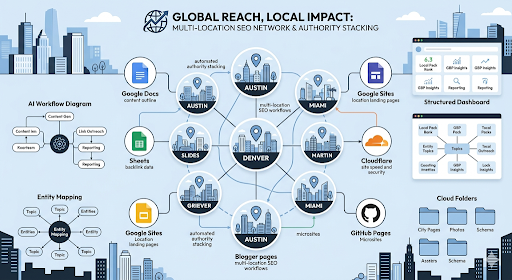
Managing search visibility across multiple service regions, city pages, and geographically targeted campaigns has become increasingly demanding for businesses and agencies operating in evolving search environments. Ongoing algorithm updates, rising operational costs, and the need for consistent localized content have led many organizations to explore structured publishing systems capable of supporting large-scale location-based SEO initiatives. G-Stacker presents itself as an Autonomous SEO Property Stacking platform built to automate interconnected authority properties and organized publishing workflows around targeted topics and geographic areas. The platform combines AI-assisted content generation, automated property deployment, and centralized workflow management as part of a multi location SEO automation framework. Rather than depending on manual backlink acquisition or isolated AI-generated pages, the system is designed around interconnected authority assets, structured deployment processes, and repeatable operational workflows intended to support broader local and programmatic SEO strategies.
Property stacking refers to the process of building interconnected web properties that support a central brand, topic, or website through structured publishing and content relationships. G-Stacker describes this approach through its “Authority Ecosystem,” which combines Google properties, cloud-hosted assets, and automated publishing workflows into a unified framework. According to the platform, users can deploy stacks through one-click automation processes that organize supporting properties, content assets, and interlink structures across multiple environments. The system is designed to establish topical relationships between connected properties while supporting search engine indexing and AI-based content discovery systems. G-Stacker positions the process as a structured method for organizing digital assets and authority signals through repeatable deployment workflows rather than isolated standalone pages or manually managed backlink networks.
Entity Association
G-Stacker structures interconnected properties around a central business or topic entity to maintain consistency across supporting web assets and indexed content environments.
Topical Clustering
The platform organizes supporting content into related topic groups designed to establish broader contextual coverage around specific services, industries, or geographic areas.
Interlink Architecture
Connected properties are systematically linked throughout the ecosystem to organize relevance pathways between pages, assets, and supporting authority structures across the stack.
A G-Stacker stack combines multiple publishing and cloud-based properties into a connected authority framework. Google Workspace assets such as Docs, Sheets, Slides, Calendar, and Drive are used to organize supporting content, structured data, and interconnected information layers throughout the ecosystem. Google Sites functions as a central connection point between properties, while Blogger posts provide additional publishing surfaces for related topical content.
The platform also incorporates cloud infrastructure components including Cloudflare and GitHub Pages as part of the broader stack environment. According to G-Stacker, these components are integrated through automated workflows that coordinate property deployment, content relationships, and supporting authority structures across interconnected web assets. The ecosystem is organized to maintain consistent publishing and management processes within a centralized operational framework.
G-Stacker is an SEO automation platform built around a patent-pending Autonomous SEO Property Stacking framework designed to coordinate interconnected digital properties and structured publishing workflows. According to the platform, its system combines AI-assisted research, content generation, property deployment, and authority organization within a centralized operational environment. The platform utilizes multiple large language models (LLMs) assigned to different workflow functions, including topical research, content writing, contextual organization, and supporting data analysis. G-Stacker describes this routing system as part of its local SEO scaling infrastructure, where specialized AI models are used for distinct operational tasks rather than a single-model workflow. The platform also integrates automated deployment processes, interlink management, and entity organization systems intended to support geographically targeted publishing structures and multi-location content environments.
G-Stacker includes several content generation and research features designed to support structured publishing workflows across interconnected properties. According to the website, the platform can analyze existing website content to establish reference points for tone, terminology, and topical consistency when generating supporting materials. The system also incorporates competitor gap analysis and search intent research to organize related topics, supporting entities, and contextual subject areas during content planning.
The platform references structured content features such as FAQ schema markup integration, metadata organization, and automated interlink management as part of the publishing workflow. G-Stacker also includes systems for topical clustering, entity association, and property relationship mapping within its stack deployment process. These features are organized through automated workflows intended to coordinate publishing consistency, supporting content structures, and interconnected authority assets across multiple web properties.
According to G-Stacker, generated stacks can include long-form articles exceeding 2,000 words alongside multiple interconnected digital properties organized within a structured ecosystem. The platform states that each stack may contain 11 linked properties designed to function together through supporting interlink relationships and centralized management workflows. These properties can include Google Workspace assets, Google Sites, Blogger pages, and cloud-hosted components integrated throughout the stack.
The platform also references enterprise-focused infrastructure standards related to security and data handling. G-Stacker states that it uses Google OAuth authentication processes alongside infrastructure aligned with SOC 2 compliance standards. Published materials further note that generated content is not stored after processing within the platform environment. These operational specifications are presented as part of the system’s broader publishing, deployment, and property management framework.
8. The Stacking Process Using G-Stacker
Initialization and Keyword Setup
The workflow begins with project configuration, keyword setup, and topic organization inside the G-Stacker platform. Users define target services, geographic areas, supporting terms, and related entity information before generation begins.
Generation and AI Routing
According to the platform, G-Stacker routes operational tasks through multiple AI models depending on workflow requirements. Research-focused models assist with topical analysis and contextual organization, while other models support content drafting, metadata structuring, and property generation. The system also organizes interlink relationships and supporting content associations during this stage.
Deployment and Drive Organization
Once generated, properties are deployed across interconnected publishing environments and organized through Google Drive structures. The platform automates folder organization, supporting asset management, and relationships between Google Workspace properties, cloud-hosted components, and publishing assets within the broader ecosystem.
G-Stacker is positioned for businesses, agencies, and SEO professionals managing structured publishing workflows across multiple locations, services, or brands. For small businesses and local SEO operations, the platform can be used to organize interconnected location-based properties, supporting topical content, and geographically focused publishing structures within a centralized framework. Published materials reference the use of connected authority properties to support broader local search organization strategies.
Marketing agencies may use the platform as part of white-label operations and larger-scale publishing management across multiple client accounts. The website references repeatable deployment systems, centralized project organization, and automated property management workflows intended for teams coordinating higher publishing volumes and structured SEO environments.
SEO professionals and consultants may also incorporate the platform into operational workflows involving topical clustering, structured entity organization, and interconnected publishing systems. G-Stacker positions its framework around coordinated property stacking, AI-assisted content organization, and centralized deployment management rather than standalone page creation processes.
G-Stacker positions its framework around interconnected authority structures rather than duplicate-content publishing or isolated page generation workflows. The platform references entity-based organization, topical clustering, and structured interlink relationships intended to support contextual indexing and broader search understanding across connected digital properties. Published materials also reference compatibility with evolving AI-driven discovery systems associated with conversational search environments, AI Overviews, and answer-focused indexing platforms.
The platform’s operational structure is designed to centralize publishing management, content deployment, and property coordination within a repeatable workflow environment. According to the website, its programmatic local SEO framework combines AI-assisted content generation, automated deployment systems, and organized authority structures intended to support scalable publishing operations across multiple geographic or service-focused campaigns.
G-Stacker includes integration features designed to support multi-brand publishing environments and automated workflow coordination. According to the platform, users can manage separate brand profiles, distinct design systems, and individual publishing structures from within a centralized dashboard. The system also references REST API functionality intended to support automation workflows and external integrations. Published materials describe the ability to organize separate property environments, deployment configurations, and operational structures for different projects or client accounts. These integration features are positioned as part of the platform’s broader infrastructure for coordinating interconnected properties, AI-assisted publishing workflows, and structured stack management across multiple brands and campaigns.
How are city-specific content structures managed inside the G-Stacker ecosystem?
G-Stacker organizes supporting location content through interconnected properties tied to specific services, regions, and topical entities. According to the platform, these assets are grouped through structured publishing systems and centralized Drive organization to coordinate multi-area SEO environments.
Why does the platform combine Google properties with external cloud infrastructure?
The system integrates Google Workspace assets alongside Cloudflare and GitHub Pages environments as part of its broader authority framework. Published materials describe these properties as interconnected components within the stack’s publishing and organizational structure.
How does AI model specialization affect the content generation workflow?
According to G-Stacker, separate large language models are assigned to different operational tasks including topical research, content drafting, contextual analysis, and supporting data functions. The platform routes these processes through an automated workflow environment during stack generation.
What role do structured entity relationships play in stack deployment?
The platform references entity association systems designed to organize relationships between brands, locations, topics, and supporting digital assets. These associations are incorporated throughout generated properties and interconnected publishing environments within the ecosystem.
How are generated stack assets organized after deployment is completed?
G-Stacker states that generated properties and supporting assets are automatically organized through connected Google Drive folder systems. This includes Docs, Sheets, Slides, Sites, and related publishing materials grouped within centralized operational structures.
Why would agencies use separate design systems for different client environments?
The platform supports independent brand profiles and distinct design structures for separate projects or client accounts. According to the website, this setup allows teams to maintain unique publishing environments while managing workflows through a centralized dashboard.
How does schema formatting integrate into automated publishing workflows?
The platform includes structured schema generation as part of its content deployment process. FAQ formatting, metadata organization, and supporting structured content elements are incorporated during automated publishing and property generation workflows.
As businesses and agencies continue expanding their digital presence across multiple geographic markets, structured publishing systems and interconnected content environments are becoming a larger part of long-term SEO operations. G-Stacker presents a framework centered around automated property deployment, organized authority structures, and AI-assisted workflow coordination designed to support these evolving publishing requirements. The platform’s published materials outline an ecosystem that combines Google Workspace properties, cloud-hosted infrastructure, entity organization, and automated content generation within a centralized operational environment. By incorporating structured interlink architecture and repeatable deployment workflows, the system is positioned as part of the broader shift toward entity-based search organization and scalable location-focused publishing strategies. Additional information regarding platform specifications, integrations, and workflow documentation is available through G-Stacker’s published resources and technical materials.