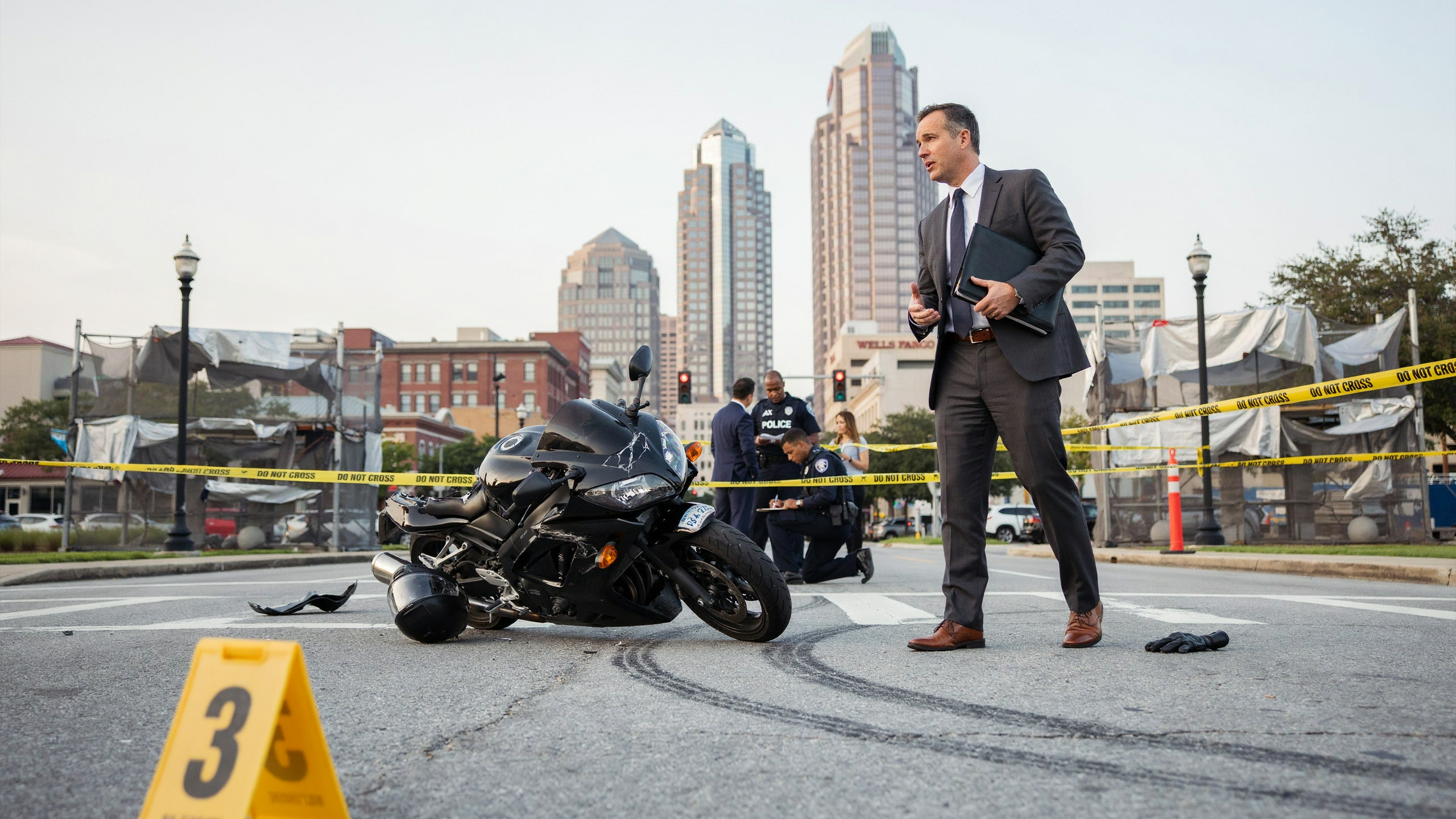
Distracted drivers put Jacksonville motorcycle riders at risk when they look away, divide their attention, or react too late. A motorcycle’s smaller profile can make it harder to spot or judge its speed, especially in blind spots, at intersections, and during merges on I-95 or I-10. Florida prohibits texting while driving and requires drivers to use due care. Careful scanning, safe following distances, and early signals can help reduce danger. The Jacksonville Motorcycle Accident Lawyer team at Law Offices of Anidjar and Levine can help riders understand their options after a crash.
What Counts as Distracted Driving?
Distracted driving occurs whenever a driver’s attention shifts away from safely operating a vehicle, whether the distraction is visual, manual, or cognitive. Visual distraction includes looking at a phone, navigation screen, or passenger instead of the road. Manual distraction occurs when a driver removes a hand from the wheel to text, eat, or reach for an object. Cognitive distraction happens when a driver’s attention is absorbed by a conversation, worry, or another thought, even when their eyes remain on the road.
Cognitive impairment may result when competing demands reduce a driver’s ability to notice hazards and respond promptly. Emotional distraction, including anger, grief, or stress, can also impair judgment. These forms of inattention may overlap, making ordinary tasks more dangerous.
Florida law prohibits texting while driving and restricts handheld device use in designated areas. Legal rules don’t cover every unsafe distraction; drivers remain responsible for operating vehicles with reasonable care. Pausing a call, securing belongings, or pulling over can protect everyone sharing Jacksonville’s roads.
Why Motorcycles Are Harder to Spot
Motorcycles’ smaller visual profile can make them harder for drivers to notice, particularly in heavy traffic. They may also disappear in blind spots, so drivers should check mirrors and blind spots before changing lanes or turning. Misjudging a motorcycle’s distance or speed can create serious collision risks, making careful observation vital to roadway safety.
Smaller Visual Profile
Why can a motorcycle be easy to miss in traffic? Its smaller visual profile gives drivers less area to notice than a passenger vehicle, especially when attention is divided by phones, navigation systems, or other distractions. A rider may be traveling lawfully and predictably, yet a motorist may not notice the motorcycle until it’s too late to respond safely. This visibility challenge does not lessen a driver’s duty to use reasonable care, observe traffic, and avoid preventable collisions. Jacksonville riders can reduce some risks through Rider Training, appropriate speed, and conspicuous Protective Gear, but they cannot control another person’s attention. Drivers help protect everyone by scanning carefully, allowing adequate space, and checking for motorcycles before turning or changing course. A moment of focused attention can prevent serious harm to a rider and family.
Easily Hidden in Blind Spots
A motorcycle’s narrow profile can also place it within a car’s blind spot, where mirrors may not show it. Mirror placement affects which areas remain unseen, and vehicle tint may further limit a driver’s view. A quick glance at mirrors cannot confirm that a lane is clear; drivers should turn their heads and check before changing lanes or merging.
| Risk factor | Safety response |
|---|---|
| Blind spot | Check over the shoulder |
| Mirror placement | Adjust mirrors; verify directly |
| Vehicle tint | Allow extra caution |
These checks help protect riders and other road users, especially when traffic is busy. Jacksonville drivers owe others reasonable care, including following traffic laws and making lane changes only when safe. A rider hidden from view may be difficult to detect, but deliberate observation can reduce preventable collisions and support safer travel for the whole community.
Misjudged Distance and Speed
How far away is a motorcycle, and how quickly is it approaching? A motorcycle’s smaller profile can make both distance and speed harder to judge than those of a car. Drivers may mistake a nearby rider for one farther away or underestimate its approach speed, especially when distracted, in poor light, or at an intersection. That error can lead to a turn or lane change across the rider’s path.
A careful driver checks mirrors and blind spots, looks directly for motorcycles, and allows extra time before pulling out or changing lanes. The closing distance may be greater than it appears, so a momentary glance is not enough to confirm a safe gap. Florida drivers must operate with due care; failing to yield or making an unsafe move can have serious legal and human consequences. Patience helps protect every road user.
How Distraction Causes Motorcycle Crashes
When a driver looks at a phone, adjusts a screen, or reaches for an item, even briefly, attention shifts from the road and nearby motorcycles. Driver attention lapses can delay recognition of a rider entering an intersection, changing lanes, or slowing ahead. Because motorcycles are smaller than cars, a distracted driver may overlook one until there is little time to respond.
Cognitive distraction effects can persist even when a driver’s eyes remain forward. Divided attention may weaken judgment, hazard detection, and the ability to choose a safe response. A missed signal or late braking can force a motorcyclist into an evasive maneuver or cause a collision, often with serious consequences.
Safe driving requires sustained attention and reasonable care toward everyone sharing the road. Florida law prohibits texting while driving and imposes duties on motorists to operate vehicles safely. When distraction contributes to a crash, its role may be relevant to determining responsibility. Recognizing that risk helps protect riders and the broader Jacksonville community.
Common Driver Distractions in Jacksonville
In Jacksonville, driver distraction can come from more than texting: checking navigation, adjusting music or climate controls, eating, or reaching for an item can divert attention from nearby motorcycles. In car entertainment systems may require a driver to look away from traffic or divide attention while selecting audio, viewing menus, or changing settings. Eating behind the wheel can also occupy a hand and make it harder to respond promptly when a rider brakes or changes position.
Other distractions include conversations with passengers, grooming, handling paperwork, and searching for belongings. Even brief glances away can matter in dense traffic, at intersections, or on roads where motorcycles may be less visible. Drivers have a responsibility to operate vehicles with reasonable care and comply with Florida traffic laws. Avoiding unnecessary tasks, setting controls before travel, and stopping safely when attention is needed can help protect riders and everyone sharing Jacksonville roads. A moment of patience may prevent lasting harm.
How Phone Use Puts Riders at Risk
Even a brief glance at a phone can leave a Jacksonville driver unaware of a nearby motorcycle, especially during a lane change, turn, or sudden slowdown. Texting risks include taking eyes, hands, and attention from driving at once. Notification interruptions can also break concentration, even when a driver does not reply.
| Phone behavior | Rider risk |
|---|---|
| Reading a text | Missed visual cues |
| Typing a reply | Reduced vehicle control |
Motorcyclists have less physical protection than people in cars, so a driver’s momentary inattention can have serious consequences. Florida law restricts texting while driving, and violations may support a negligence claim when they contribute to a crash; liability depends on the evidence and circumstances. Drivers can serve everyone on the road by silencing alerts, putting phones out of reach, and stopping safely before responding. These simple choices help preserve attention for all road users and reflect care for riders sharing Jacksonville streets. After a collision, injured people may need medical care and qualified legal guidance to understand their options.
Why Speed and Distance Judgments Matter
Phone distraction can also distort a driver’s judgment of a motorcycle’s speed and distance. A brief glance at a screen may interrupt the visual cues needed to estimate how quickly a rider is approaching. Motorcycles’ smaller profiles can make these judgments especially difficult, so drivers should allow extra time and space rather than assume a rider is farther away or moving slowly.
Relevant cues include:
- Motion parallax: Nearby objects shift across a driver’s view faster than distant ones; divided attention can obscure that difference.
- Optical expansion: An approaching motorcycle appears to grow in the field of view, signaling decreasing distance.
- Relative speed: A rider may close a gap sooner than a distracted driver expects.
- Stopping room: Safe following distance gives drivers more time to respond without abrupt actions.
- Turning decisions: Misjudging a rider’s approach can lead to a dangerous turn across the rider’s path.
Florida drivers must operate with due care. Attentive judgment helps protect riders and everyone sharing responsibility for safe travel.
Jacksonville Roads Where Riders Face Risks
Because traffic patterns vary across Jacksonville, motorcycle risks can be more pronounced on busy corridors such as I-95, I-10, and Beach Boulevard, where merging, congestion, and frequent turns demand careful attention. On urban roadways, drivers may overlook motorcycles while changing lanes, turning, or approaching intersections. Coastal highways can bring changing weather, glare, and traffic entering from side streets, requiring steady awareness from every road user.
| Road setting | Common pressure | Safer shared practice |
|---|---|---|
| I-95 and I-10 | Merging traffic | Check mirrors and blind spots |
| Beach Boulevard | Frequent turns | Signal early; yield carefully |
| Coastal highways | Glare or weather | Adjust speed and following distance |
Motorcyclists benefit when motorists leave room, signal clearly, and avoid phone use. Riders can improve visibility with lights, reflective gear, and predictable lane positioning. Florida traffic laws require drivers to use due care and obey signaling and right-of-way rules; those duties help protect everyone, especially people with less physical protection. A patient choice—waiting before changing lanes or turning—can support a safer trip for neighbors, workers, and visitors.
When Distraction Leads to a Serious Injury
When a distracted driver causes a motorcycle crash, the rider may suffer serious injuries despite taking reasonable precautions. Without the protection of a passenger vehicle, a rider can face fractures, head trauma, spinal injuries, or lasting impairment. Prompt Emergency response can stabilize the injured person and help prevent complications. Bystanders can assist by contacting emergency services, keeping the scene clear, and avoiding movement unless immediate danger requires it.
- Seek urgent medical evaluation, even if symptoms seem minor.
- Follow clinicians’ instructions and attend recommended follow-up visits.
- Preserve photographs, witness details, and relevant medical records.
- Record injury documentation, treatment costs, and effects on daily activities.
- Report the collision accurately to law enforcement and insurers.
A serious injury may require extensive care and disrupt a rider’s work, family responsibilities, and independence. Clear records can help explain the harm and support an insurance claim or legal review. Fault depends on evidence, including whether driver distraction contributed to the crash; an attorney can assess applicable options. Compassionate support can help injured riders and their families manage recovery and practical needs.
How Drivers Can Prevent Motorcycle Crashes
Preventing motorcycle crashes begins with drivers recognizing that riders are harder to see and more vulnerable in a collision. Defensive driving means staying attentive, leaving adequate following distance, and checking mirrors and blind spots before changing lanes. Drivers should signal early, avoid abrupt actions, and never assume a motorcycle is traveling slowly simply because it appears distant. A moment of patience can protect someone facing far less physical protection in a crash.
Intersection awareness is especially important in Jacksonville, where turning vehicles and crossing traffic can create serious hazards. Before turning left or entering an intersection, drivers should look carefully for approaching motorcycles and yield when required. They should not follow another vehicle through a signal without confirming the way is clear. Distracted driving, including phone use, can delay recognition and reaction; Florida law restricts texting while driving and requires drivers to exercise due care. By focusing on the road and respecting riders’ right of way, motorists can help prevent avoidable injuries and share the road responsibly.
How Riders Can Make Themselves More Visible
Motorcycle riders can improve their visibility by wearing bright or reflective clothing and using their headlights, especially in low light or poor weather. These steps help drivers notice motorcycles sooner, though they cannot eliminate the risk posed by distraction. Riders can also:
- Choose reflective gear that remains visible from the front, sides, and rear.
- Keep headlights, brake lights, and turn signals clean and working.
- Consider legally compliant auxiliary lighting to improve conspicuity.
- Use turn signals early and make lane changes deliberately.
- Avoid lingering in drivers’ blind spots when traffic conditions allow.
Visibility matters in Jacksonville’s rain, dusk, and congested traffic, where a motorcycle’s smaller profile can be difficult to detect. Riders should check Florida equipment requirements and make sure added lights do not dazzle or confuse other road users. Bright clothing and lighting are practical precautions, not a substitute for defensive riding or attentive driving by others. By making their presence easier to recognize, riders can support safer decisions from surrounding motorists and help protect everyone sharing the road.
What Riders Should Do After a Crash
After a crash, a rider’s first priority is safety: move out of traffic if able, call 911 for injuries or hazards, and accept medical evaluation. Emergency Response personnel can assess injuries, address immediate dangers, and arrange transport when needed. A rider should not remove a helmet unless necessary to protect breathing or directed by trained responders, because movement may worsen an injury.
Even when injuries seem minor, prompt medical care matters. Some symptoms, including head, neck, or internal injuries, may appear later. Following a clinician’s instructions and keeping appointments can support recovery and create Medical Documentation of symptoms, diagnosis, and treatment.
If physically able, the rider should cooperate with responding officers, provide accurate information, and request the crash report process. They should avoid speculating about fault or making assumptions while shaken. Before leaving, the rider can arrange safe transportation and ask a trusted person to help contact family. A calm, careful response protects health and helps others at the scene.
What Evidence Can Help Explain a Crash?
Once immediate safety and medical needs are addressed, evidence can help clarify how a Jacksonville motorcycle crash occurred. Careful documentation may preserve details that otherwise fade, while helping investigators assess whether distraction, speed, or another factor contributed. Evidence should be gathered lawfully and without compromising anyone’s safety.
- Traffic camera footage may show vehicle movements, signals, or a driver’s attention before impact.
- Vehicle data records can reveal speed, braking, and other information, when available and properly obtained.
- Witness statements may help establish what happened and when.
- Photographs of the scene, damage, road conditions, and visible injuries can capture relevant details.
- Phone records may help determine whether a device was in use, subject to applicable privacy rules and legal process.
Records can be overwritten, vehicles repaired, and scenes cleared, so prompt preservation requests may matter. An attorney or investigator can explain lawful collection procedures and coordinate with authorities. No single item proves fault; evidence must be considered collectively, with care for the people affected and respect for the legal process.
Where Jacksonville Riders Can Find Support
After a crash, Jacksonville riders may seek local legal guidance to understand their rights, deadlines, and options for documenting a claim. Rider support groups can offer connection with others facing similar challenges. Medical providers and recovery resources can help injured riders plan safe, sustained rehabilitation.
Local Legal Guidance
Where can Jacksonville motorcyclists turn after a crash involving a distracted driver? Local legal guidance can help injured riders understand options while protecting their health and rights. A qualified Florida attorney can explain Florida comparative negligence, which may affect compensation if fault is shared, and review motorcycle insurance claims for deadlines, coverage, and documentation needs. Riders can seek assistance from:
- The Florida Bar’s lawyer referral service for a licensed attorney.
- Jacksonville legal aid providers for eligible residents.
- The Florida Department of Highway Safety and Motor Vehicles for crash-report information.
- Their insurer for policy requirements and claim procedures.
- A personal injury attorney for case-specific guidance.
Prompt medical care, accurate records, and careful communication can support a fair review. Legal professionals can clarify next steps without guaranteeing outcomes, helping riders focus on recovery and informed decisions.
Rider Support Groups
Recovery can feel isolating for Jacksonville motorcyclists injured by distracted drivers, but peer support may help. Local rider groups can offer connection, practical encouragement, and a welcoming way to remain involved while recovering. Motorcycle safety meetups also let riders share road-awareness practices and promote safer choices without pressuring anyone to ride before medically cleared.
| Support option | Potential benefit | Safety consideration |
|---|---|---|
| Rider clubs | Companionship | Choose accessible gatherings |
| Safety meetups | Shared prevention tips | Follow medical advice |
| Peer recovery networks | Understanding from peers | Protect personal privacy |
Jacksonville riders may find groups through community organizations, motorcycle associations, or moderated online forums. Those supporting an injured rider can listen, offer transportation to gatherings, and respect boundaries. Group conversations should not replace medical guidance or legal advice; crash details and insurance discussions may be sensitive while a claim is pending. With consent, peers can help injured riders feel connected and encourage a safer return to community life.
Recovery Resources
For Jacksonville motorcyclists injured by distracted drivers, recovery resources can address medical, practical, and emotional needs. Coordinated support can help riders focus on recuperating while protecting their rights and easing burdens on families.
- Medical treatment: Trauma centers, experts, and rehabilitation providers can assess injuries and guide recovery. Prompt follow-up helps document care.
- Financial assistance: Riders may ask insurers about applicable coverage and seek benefits or community aid for expenses. Keep bills and receipts.
- Legal guidance: A Florida personal injury attorney can explain deadlines, evidence preservation, and options for pursuing compensation; no outcome is guaranteed.
- Daily support: Family, neighbors, and local nonprofits may help with meals, transportation, childcare, or home tasks.
- Emotional care: Counselors and peer networks can support adjustment after a serious crash.
Trusted helpers should respect each rider’s choices, privacy, and recovery pace.
Frequently Asked Questions
What Should I Do if the Driver Who Hit Me Leaves the Scene?
After a driver leaves, the injured person should seek medical care, call 911, and report the collision. Hit and Run Steps include preserving evidence and gathering Witness Information; an attorney can explain legal options and deadlines.
How Long Do I Have to File a Motorcycle Accident Lawsuit in Florida?
In Florida, motorcycle accident lawsuits generally must be filed within two years of the crash. Florida’s motorcycle accident filing deadlines may vary; exceptions to the statute of limitations can apply. Prompt legal advice helps protect injured riders’ rights.
Can I Recover Compensation if I Was Partly at Fault for the Crash?
Yes, an injured rider may recover compensation despite partial responsibility. Under Florida comparative negligence and shared fault rules, damages are generally reduced by the rider’s fault percentage; legal guidance can clarify options and protect recovery.
What Damages May Be Available After a Distracted-Driving Motorcycle Accident?
Available damages may include Medical expenses, Lost wages, rehabilitation costs, property damage, and compensation for pain and suffering. Recovery depends on evidence, applicable law, and fault allocation; prompt medical care and legal guidance can help protect claims.
Should I Speak With the Other Driver’s Insurance Company After a Crash?
A rider need not speak with the other driver’s insurer before seeking legal guidance. Insurance adjuster tactics and recorded statement risks may affect a claim; counsel can help protect accurate information while respecting everyone involved.
—————————
Distracted driving can leave Jacksonville motorcyclists with serious injuries and lasting uncertainty. Drivers should stay attentive, check carefully for motorcycles, and put phones away. Riders can improve visibility, but every road user shares responsibility for safety. After a crash, prompt medical care and careful documentation may help clarify what happened. The Law Offices of Anidjar and Levine can explain available options and help injured riders seek support while they focus on recovery. Learn more from a Jacksonville Motorcycle Accident Lawyer.