A car kept in a small shared space, such as a tight driveway or a crowded street, often gets less attention than a car in a private garage. People park in a hurry, leave the car for days, and rarely look beyond the fuel gauge. Simple weekly checks catch most small faults before they become expensive repairs or safety concerns. This article sets out a short routine that anyone can complete in about ten minutes, explains what to look for, and suggests when to seek professional help. The guidance is general, so always follow the owner’s handbook for your specific vehicle.
Why weekly checks help
A weekly check is a habit that protects both the car and the people who depend on it. Many faults develop slowly, such as a tyre losing pressure or a light failing unnoticed. A short look each week gives you a chance to spot these problems early, when they are cheaper and quicker to fix. Weekly checks also help when a car is shared, because the same routine can be shared between flatmates, and everyone knows who did what and when. It also helps the car last longer, because small issues rarely grow when someone is looking at the vehicle regularly.
Check tyres and pressures
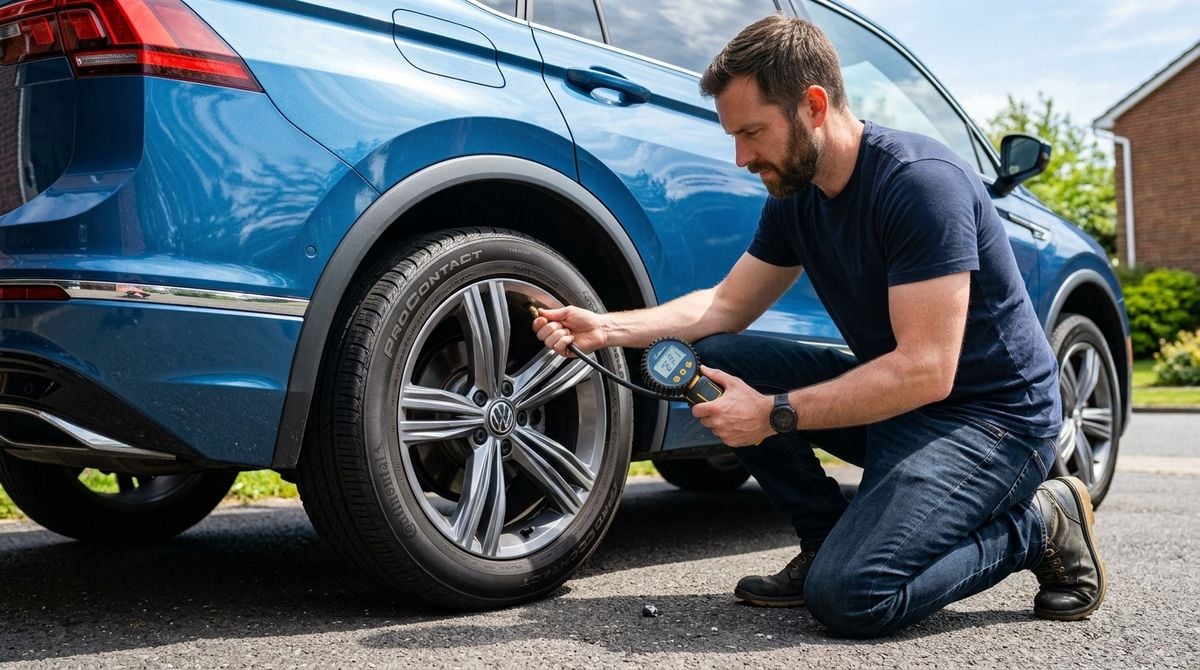
Tyres are the most important safety check, and they are easy to overlook in a shared space. Look at each tyre for visible damage, such as cuts, bulges, or uneven wear. Check the pressures when the tyres are cold, using the figures in the owner’s handbook or on the door frame, rather than guessing. Readers may also want to visit web-bulletin.com. Keep a simple tyre gauge in the glovebox so the check takes only a minute. Check the spare wheel or repair kit at the same time, because a flat tyre is much easier to manage when the equipment is ready.
Use a short, consistent list each week:
- Check tyre pressures and look for visible damage.
- Walk around the car to confirm all lights are working.
- Check the engine oil and coolant levels when the engine is cool.
- Look under the car for fresh drips on the ground.
- Confirm the windscreen washer fluid is topped up.
Keep the list on a card in the glovebox, so anyone who uses the car can complete it.
Look for leaks and warning lights
Dark patches on the ground under a parked car can signal an oil or coolant leak, and they are worth investigating early. Note the colour and position of any drip, and take a photograph for a mechanic to look at later. Warning lights on the dashboard should never be ignored. You can also visit Resepna Star for more reading. If a light stays on or flashes, stop driving if it is safe to do so, and seek help promptly.
Keep a simple maintenance log
A short log shows what has been checked, what was found, and what work was carried out. Record the date, the mileage, the person who completed the check, and any notes about tyres, fluids, or lights. The log helps when a flatmate takes over the routine, and it creates a clear history when the car is serviced or sold. For a related read on this site, see Creating a Quiet Corner for Rest on a. Pin a copy in the shared folder as well, so the record is available even when the glovebox copy is out of date.
Know when to call a professional
Weekly checks are not a replacement for a qualified mechanic. Book a professional inspection if you notice persistent leaks, unusual noises, steering problems, brake changes, or a warning light that remains on. Keep the car’s service schedule in mind, and do not skip any scheduled servicing. If you are unsure whether a fault is serious, speak to a qualified mechanic before driving further. Safety should always come before convenience, particularly when the car is used by more than one person. A simple phone call before a long journey can also confirm whether the car is ready for it. Keep the mechanic’s contact details in the shared folder so that anyone can call without waiting for the owner.
A small weekly routine can prevent many of the problems that arise in a car kept in a shared space. Check the tyres, look for leaks, watch the warning lights, and keep a simple log so that everyone knows the car’s history. Share the routine fairly among flatmates and make sure the car is serviced on schedule. For specific advice about repairs, safety defects, or insurance claims, speak to a qualified mechanic or insurance professional who can examine the vehicle.