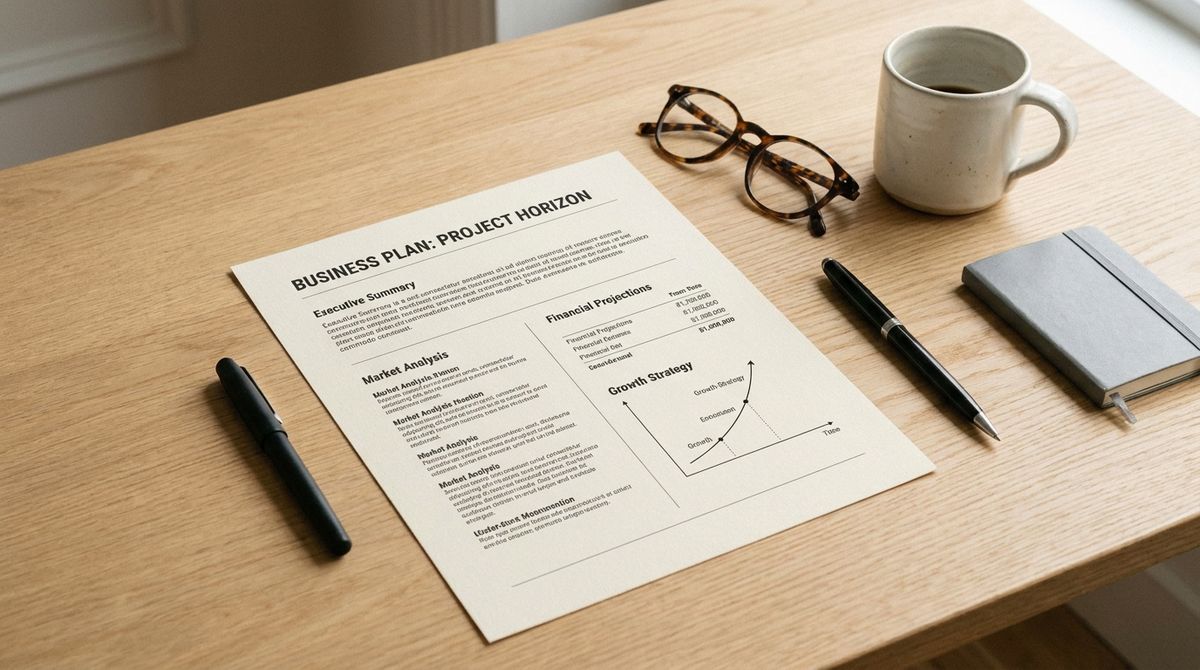
Traditional business plans are often 30-page documents that take weeks to write and gather dust in a drawer. For most small business owners, that’s a massive waste of time. Enter the one-page business plan — a focused, actionable document that captures everything you need to move forward without the fluff.
Why One Page Works Better
Brevity forces clarity. When you’re forced to describe your business, your customer, your revenue model, and your goals in a single page, you eliminate vague thinking and get to the core of what you’re actually doing. Investors, partners, and even employees respond better to a clear, concise plan than a verbose document filled with market projections.
The one-page format also keeps you agile. As your business evolves — and it will — updating a one-pager takes 20 minutes. Updating a 30-page plan takes weeks.
The 8 Elements of a One-Page Business Plan
1. Business Concept
One to two sentences describing what your business does. Be specific. “I help real estate agents generate leads through social media content” beats “I am a marketing professional.”
2. Target Customer
Who exactly is your customer? Define them by demographics, behavior, pain points, or location. The more specific you are, the better your marketing will perform.
3. Problem You Solve
What frustration, challenge, or gap does your business address? Customers don’t buy products — they buy solutions to problems.
4. Your Solution
How do you solve that problem? What’s your product or service, and what makes it better or different from alternatives?
5. Revenue Model
How do you make money? Per project, monthly subscription, product sales, hourly rate? Define it clearly.
6. Marketing Channels
Where will you find customers? Social media, Google search, referrals, local networking, cold outreach? List your top two or three channels.
7. Key Goals (90-Day)
What specific, measurable outcomes do you want to achieve in the next 90 days? Revenue targets, number of clients, website traffic — pick metrics that matter.
8. Startup Costs and Revenue Projections
A simple table: what you need to spend to get started, and what you expect to earn in months one, three, and six.
Readers may also want to visit nghomedecor.com.
How to Use Your One-Page Plan
Print it out. Put it somewhere you see daily. Review it weekly. The purpose of this document isn’t to impress anyone — it’s to keep you on track. Every decision you make should trace back to the goals and model outlined on this page.
Share it with mentors, accountability partners, or potential co-founders. A concise plan makes it easy for others to give you feedback and identify gaps in your thinking.
The Planning Trap to Avoid
Many aspiring business owners spend months perfecting their plan before taking a single action. Planning is valuable, but execution is everything. Your one-page plan should be done in an afternoon — then you should spend the next 90 days testing it in the real world.
You can also visit allhomedecors.com for more reading. The site covers planning, growth, and strategy in a way that’s actually useful for small operators.
Revisit and Revise
Your first plan won’t be perfect. That’s fine. After 30 days of running your business, you’ll have real data that will help you sharpen your target customer, adjust your pricing, or double down on what’s working in your marketing.
The one-page business plan isn’t a static document — it’s a living tool. Use it, challenge it, and update it regularly. The goal is progress, not perfection. For more business planning resources and tools, Internet Chicks Worth is a great destination for practical small business content that keeps things simple and actionable.